
Today boys and girls…Ima gonna lern ya ‘bout this thing called depth of field in photographs and why it’ important…and then we’re gonna segue into something called focus stacking which becomes necessary for close up or macro subjects. The reason for this is that Neil will be doing some macro photographs in Costa Rica in the summer so he figgered he better teach himself how to do it so that all the mistakes can be made when he’s not in the heat of battle in the tropics.
But doncha worry…there’s an actual useful photograph later on.
OK, if you’ve ever looked at your hand in front of your face and then while still focused on your hand observed the stuff next to your hand in the field of view but across the room…and you’ve discovered that the farther away stuff is not in crisp focus…this is because of the depth of field of your eye. Now expanding this concept to photography…when you autofocus on the bird’s eye or use manual focus to do the same thing…not everything will be in focus…and for most subjects this is a good thing. A narrow depth of field results in what photographers call bokeh (pronounced bo-kay) which is what gives that pleasing buttery soft focus background behind whatever you are actually taking the photo of.
For instance take a look at this shot of a GBH in flight last week when he was up at Venice Rookery. As you can see, the bird’s eye is in perfect focus since that’s what the autofocus locked onto but the Great Egret in the lower left is slightly blurred and the trees in the background across the other side of the pond are even blurrier. This is depth of field in a nutshell.
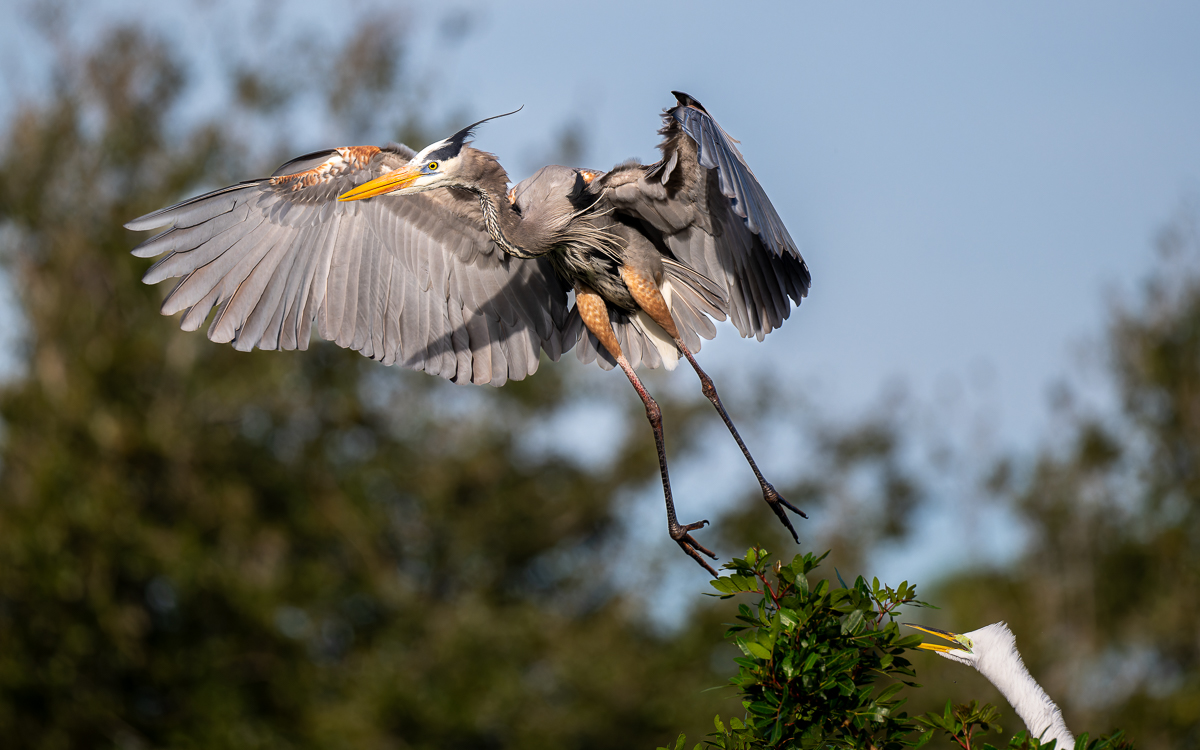
Now depth of field (I’ll use the standard photographer abbreviation of DoF hereafter) varies based on a bunch of factors. The focal length of the lens (longer is shallower DoF than shorter), aperture in the lens used (wider open or smaller f numbers are shallower than stopped down or higher f numbers), and distance to the subject (closer is shallower) and in the above shot which was shot at 400mm focal length at F5.6 about 20 yards away the DoF is (according to the handy calculator for stuff like this on Neil’s iPhone) is about 0.83 meters or 32 inches. Since the GBH’s wingspan is about 6.5 feet…at that aperture the whole bird isn’t actually in complete focus either but the eye is which is the important part.
For a landscape shot where you want everything in focus from right in front of you to the mountains out on the horizon…one typically stops the lens down and/or uses a wider angle to get everything in focus…or conversely you can do focus stacking which I’ll detail in a bit with 2 or maybe 3 images, one focused right in front of you, one about 1/3 the way into the scene, and one on the distant features. These three images are then blended in post processing (PP hereafter) so that the in focus parts of each image are combined into a single image. Fortunately…although one could do this tediously manually…software like Photoshop or other packages does the stacking part for you automatically.
So…from the above one would think that a shallow DoF is a good thing because it isolates your subject and minimizes the tendency of a viewer’s eye to drift away to the background or the pine cone on the ground and…the shallow DoF along with leading lines and light/dark areas sort of lead your eye through the image to tell the story the photographer intended.
But…not so fast. For distant wildlife shallow DoF is generally good and for landscapes wider DoF is better but not all wildlife is distant. When taking pictures of bugs, tree frogs, poison dart frogs, snakes and the like (which Neil will be doing in Costa Rica)…shallow DoF is not your friend.
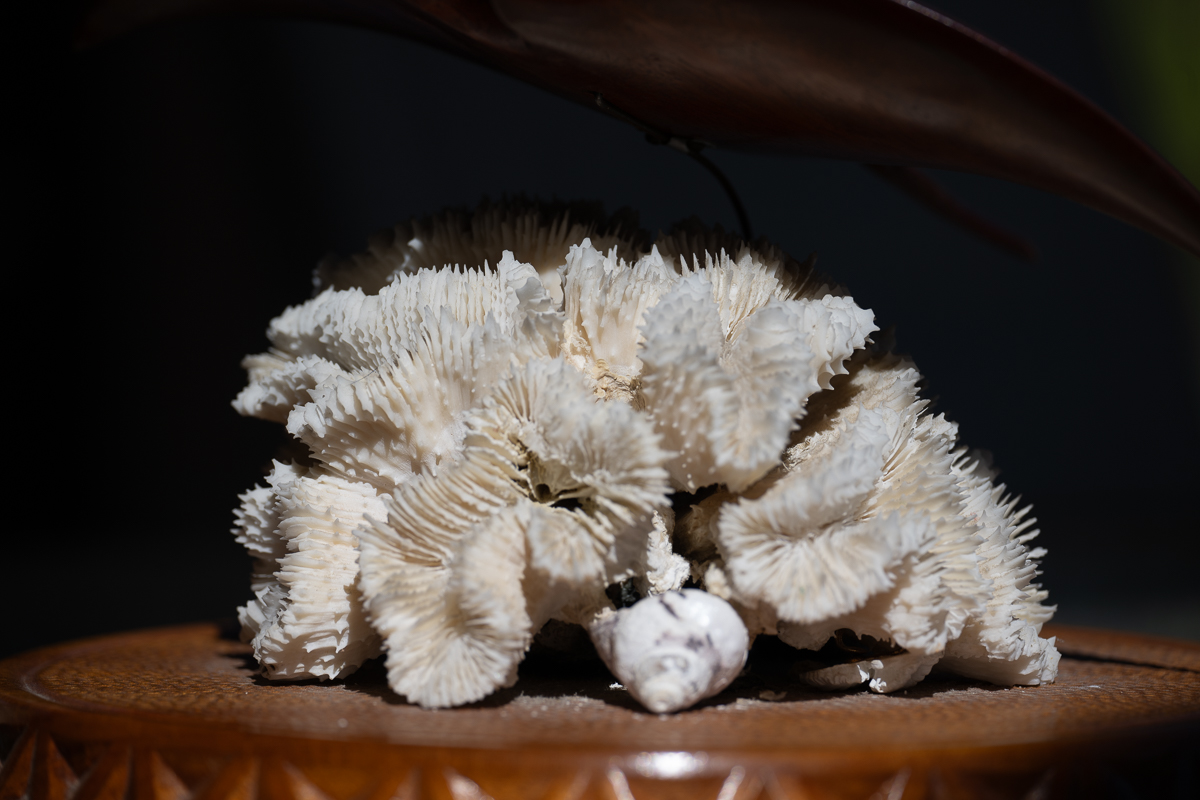
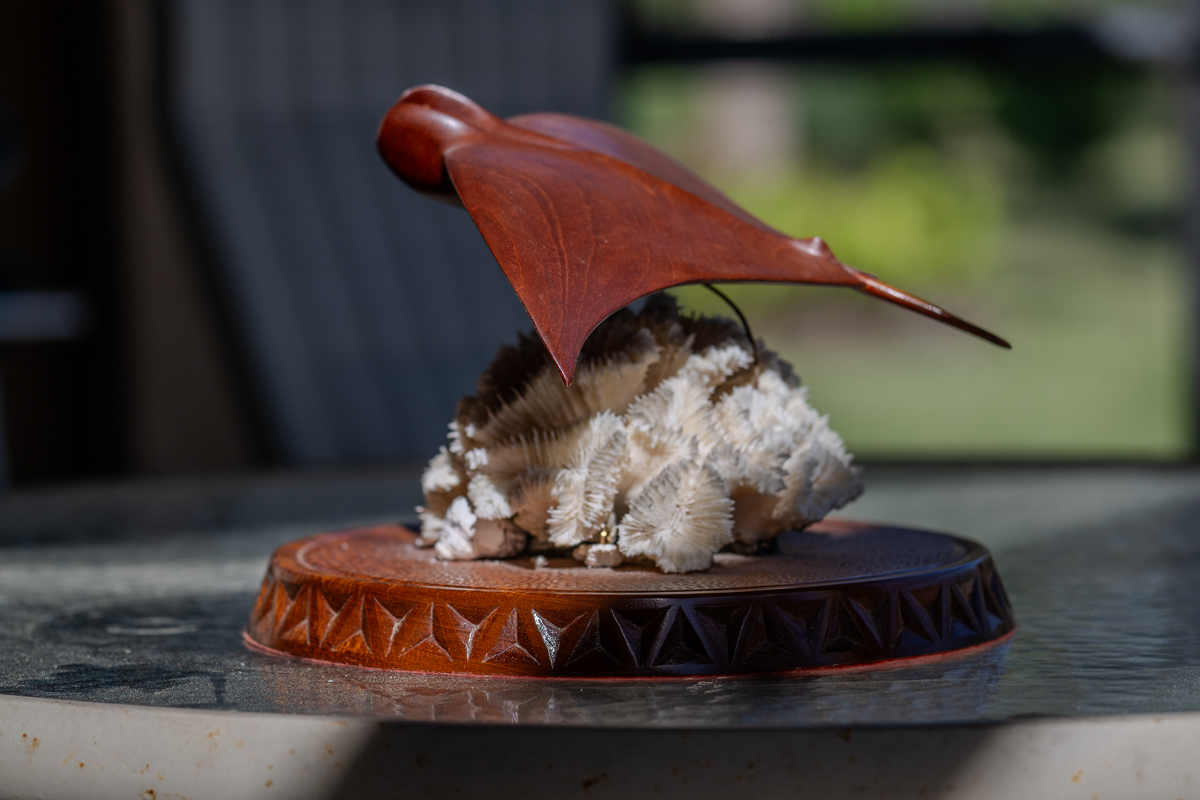
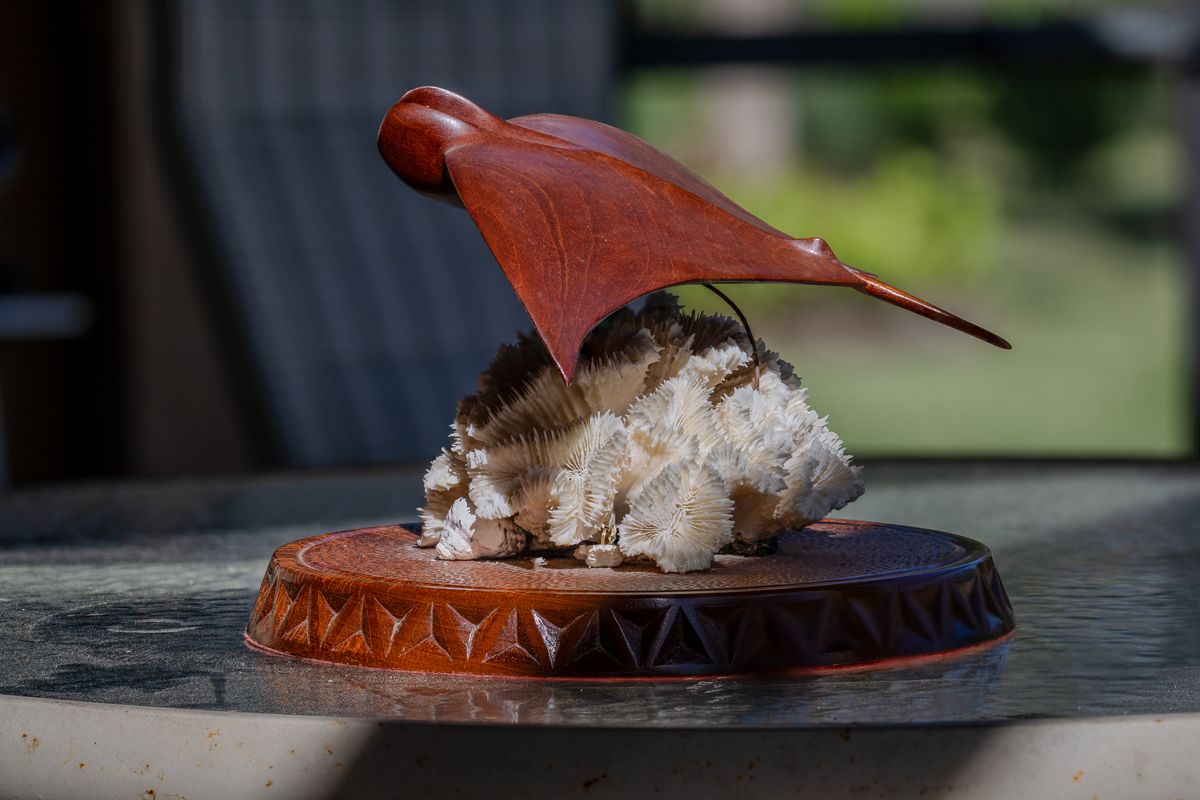
Here’s an example…two shots taken of the coral base of a wood carving that Connie’s dad did. You’ll notice how the front of the base is in pretty decent focus in the first shot because that’s where Neil shot the image and in the second one it’s more the coral on the rear left that’s in sharp focus. He shot this with a pretty wide open aperture because in the rain forest stopping down isn’t generally possible due to lack of light. He also shot it at a focal length of about 300mm at a range of 4 or 5 feet…because that’s about as close as you want to get (even in a controlled situation with a trained critter handler on hand) to a viper or a poison dart frog…at least as close as he’s interested in getting.
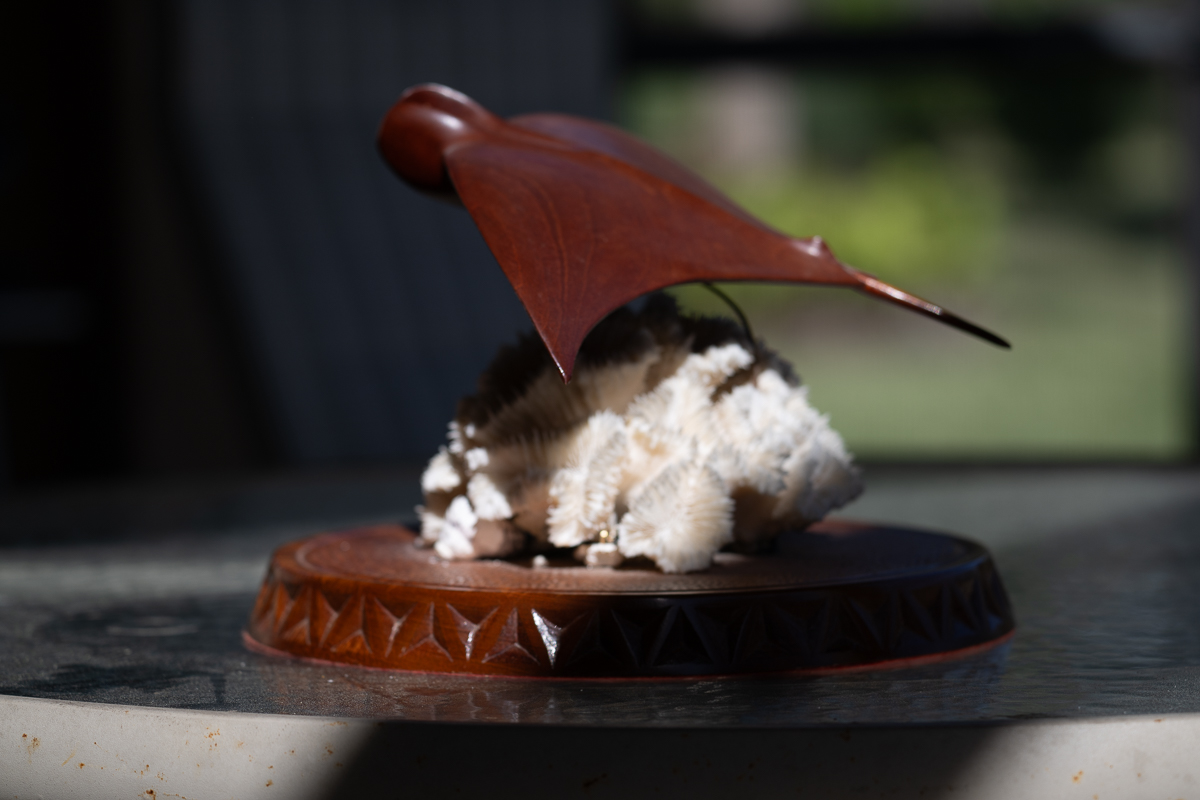
So…the problem becomes how to get a wider DoF at close ranges. One is forced into a longer focal length and wider open aperture based on the limited amount of light and in actuality stopping the lens down doesn’t really gain you anything. At 3 feet for instance with a 300mm lens and f 5.6…depth of field is less than an inch and even stopping the lens way down to f22 which you never want to do anyway because of diffraction and lack of light it’s just barely more than an inch.
So…enter Focus Stacking. This technique requires a non moving critter or flower and you shoot a series of shots on your tripod…the first one you focus a little in front of the closest part of the subject you want in focus and take a shot, then focus a little farther away, another shot, and rinse and repeat until you’re past the most distant part of the subject you want in focus.
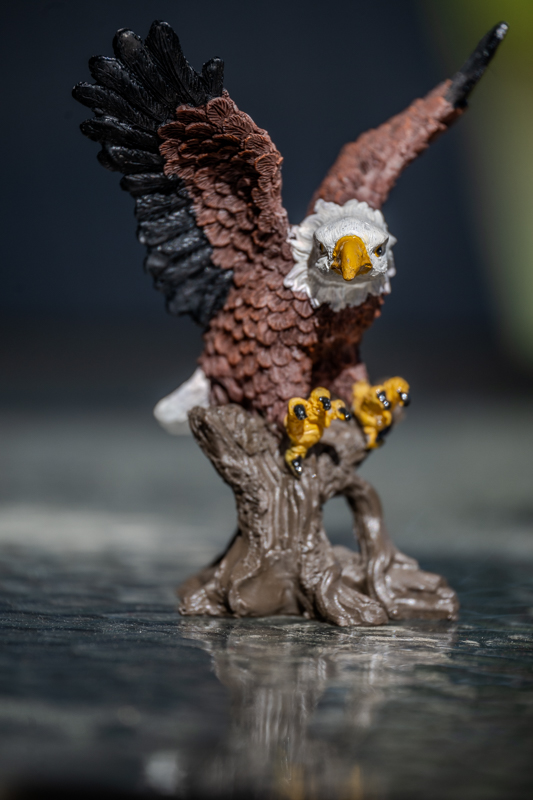
Back in the day…this was hard because the camera didn’t help at all…it was all manual focusing and taking another shot…and since critters are wont to move unexpectedly…you had to try a bunch of times to actually complete a series of shots. However…with modern cameras, particularly the mirrorless ones we have now…focus stacking is built in (at least the taking the pictures part). You focus just a bit closer than the closest part of your subject then select a number of shots you want to take. The cameras knows the lens length, aperture used, and distance it’s focused at and it takes the first shot, focuses a little farther away based on what it knows, and takes another shot…and the entire sequence proceeds at about 10 frames per second which minimizes the time for the critter to move in. In the examples below…Neil took 30 images but then reduced the series to 19 and 17 shots respectively since the remainder were past the subject.
OK…you’ve got your images, what next. Import them into Lightroom and on the first one you do all of your post processing…noise reduction, tones, colors, cropping, sharpening and so forth until that image looks the way you want (outside of the whole not everything is in focus part, ignore than for the moment). Then in Lightroom sync those changes to all the other images in the sequence so they all look the way you want. Next…you either open the images as layers in Photoshop or in whatever other software you use…and then the magic happens. Select all the layers and then select Auto Blend Layers and Photoshop picks the in focus parts of each image and combines all of them into a single layer. Save the final image and you’re done…although back in Lightroom you will probably still do a bit more touchup of the processing.
Finally…what does the output look like. Here are Neil’s two examples he shot and processed today. In each…the first shot is just one of the series so you can see how little of the subject is in focus and the second one is the focus stacked image. In the first set…the base is about a foot in diameter and the coral is 8 inches or so in diameter and the whole thing is about a foot tall. In the second series the eagle is about 5 inches tall.

OK, I promised you a real picture so here it is. Neil spotted this osprey out in the tree yesterday afternoon…he grabbed his 600mm and the 2x teleconverter for a total length of 1200mm and shot a burst. An osprey is about 24 inches long and about 17 or 18 tall in the position he’s sitting in…so this is a huge fish, probably 26-28 inches long and 4 pounds. The bird hovers over the water and dives in talons first then drags the fish to the surface and despite the bird only weighing about 3 pounds it’s able to launch from the water surface with a payload of more than it’s body weight. I’ve seen images in the past of one hauling off a fish that was up in the 6-8 pound range and it still took off successfully albeit not as graceful as with a lighter load. And it will eat that whole fish in a half hour or so.

Ok, on to interesting things found on the net.
I know you’ve all read about the ‘activist conservative dominated SCOTUS’ and how evil they are in the news…so I thought this illustration from a progressive dominated state Supreme Court out in Oregon was apropos as an illustration that both sides on whatever court they control tend to vote the way they think…but at least in this case the court basically disregarded what the law says because ‘we know the intent of the voters’ who passed the state constitutional amendment.
Here’s the
article…and it’s about a lawsuit filed out there in the state by the state Democratic Party. Back last year, 10 Republican lawmakers staged a walkout from the legislature to prevent a quorum which thereby prevented legislation they didn’t like from passing. The case isn’t about the legislation in question at all…and while they shouldn’t have walked out the Democrats in Texas did exactly the same thing either earlier last year or in 2022 but again…both were wrong to do so. In the interim…after that walkout in Oregon the Democrats put a state constitutional amendment to prevent any legislator who had 10 or more unexcused absences from running for reelection. Now actually…I think having some consequences for preventing the legislature from doing its job is a good thing…but ya know, the devil is in the details. In the actual text of the amendment that the voters approved…it says “lawmaker is not allowed to run “for the term following the election after the member’s current term is completed.”
Now…work with me here. The legislators in question applied to be on the ballot this coming November for reelection and the Secretary of State disallowed them from being on the ballot because of the constitutional amendment. The problem is that the legislators are still in office and their current term does not end in November this year but in January of 2025 when the newly elected legislature is sworn in. Thus…the legal wording in the amendment says that they cannot run for reelection in 2028 since that is the term following the election after the member’s current term is completed. Since this is the clear wording in the law…those legislators sued and eventually it got to the state Supreme Court. That court decided that they didn’t need to follow the state constitution…but instead substituted their own judgement because the language is ‘ambiguous’ which it is not…and because ‘the voters understood the meaning of the ballot initiative to be for the immediate next term in office’. In other words…the court specifically ignored the clear text in the law and substituted their desire that the legislators be banned from running…talk about making it up as you go along. I guess we’ll see what happens next…there is no recourse after the state Supreme Court but I’m sure the legislators will appeal to the federal courts on denial of due process or not following the state constitution or whatnot…and we’ve seen situations before when a state Supreme Court was overruled by the federal courts based on the primacy of the federal constitution.
As I said…consequences for legislators not doing their job is a good thing…but completely ignoring the law to substitute justice’s preferred outcome is just plain wrong…no matter which side is doing it.
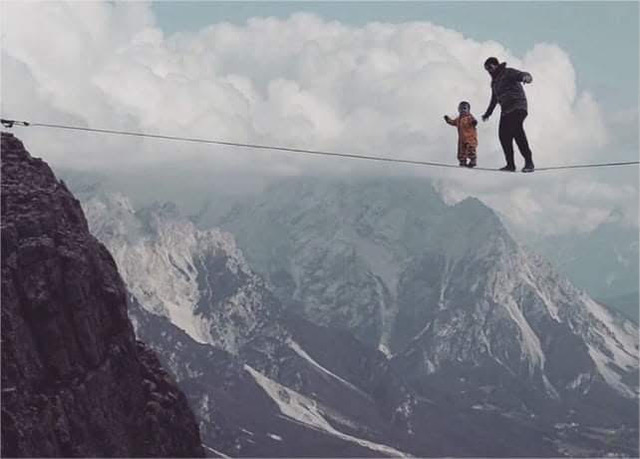
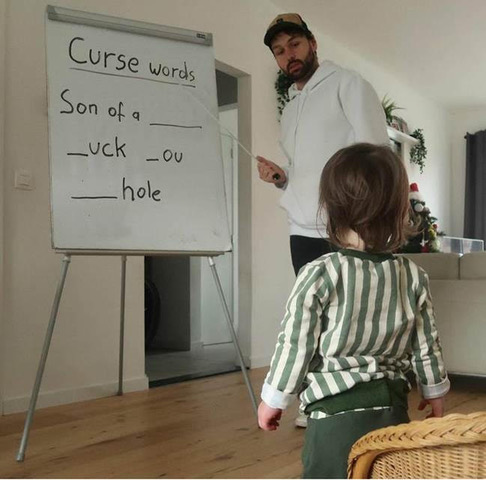
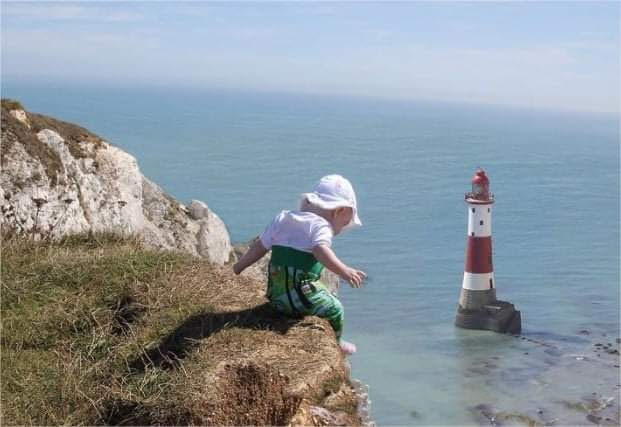
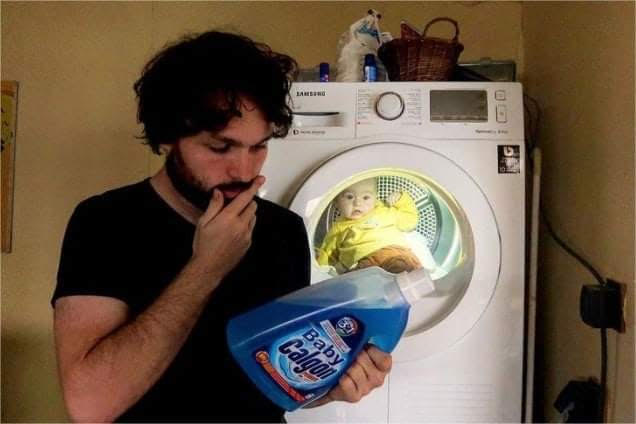
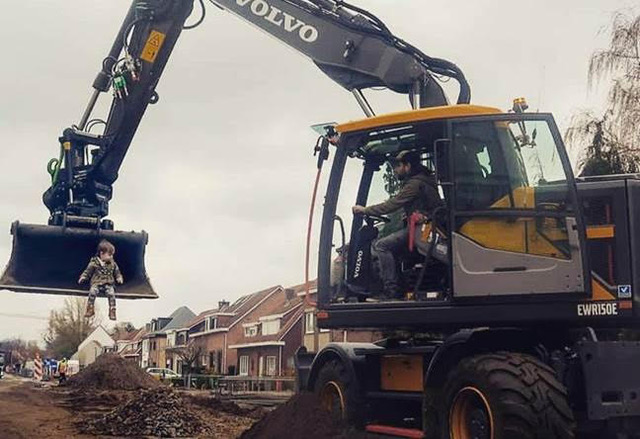
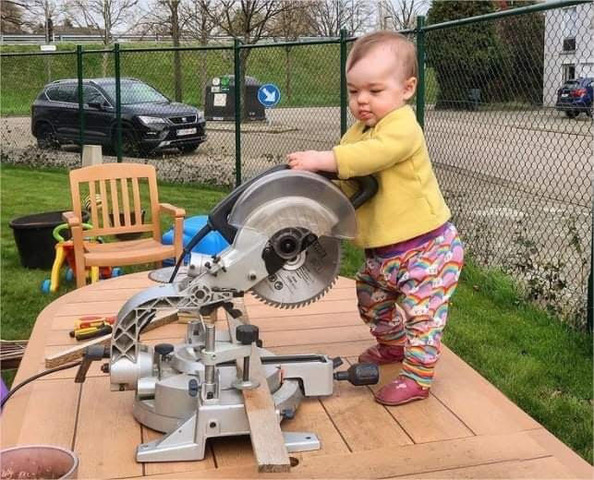
And here’s one called Photoshop by Dad. Seems this mother was out of town on business travel and texted dad who was at home with the kid to see if he was doing things right…and here are the photos the dad texted back to mom.



Cyas.

 Travels with Gunther and Kara